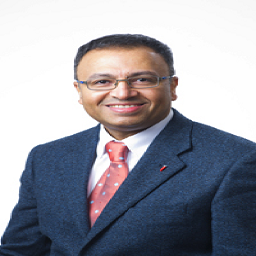
Prof. Daoud is a Professor in the Department of Mechanical Engineering at City University of Hong Kong. He graduated from the University of Technology Graz, Austria, with a Dipl-Ing degree (BS and MS) in Chemical Engineering and received his PhD in flexible bilayer photovoltaic cells from the University of Sheffield, UK. Prof. Daoud’s current research is mainly focused on the areas of energy harvesting and smart wearable technologies. His group is developing approaches for harvesting free or waste energy, such as light and kinetic energies. Being intermittent sources, it is equally important to find storage solutions for this form of energy. Therefore, the group is interested in the modelling and design of compatible batteries. He has received international renown and several awards for his pioneering research on wearable solar and kinetic energy harvesting technologies. His research has featured in Nature (2004) and Science (2008) and broadcasted through interviews by major international media, such as Reuters (2014), BBC (2015) SCMP (2017), Physics World (2021) and PV Magazine (2022). He has been invited to present Plenary and Keynote lectures at international conferences and is currently serving as the Chief Editor of Wearable Electronics, Frontiers in Electronics and Editorial/Advisory Board of Journal of Power Sources Advances and Industrial Chemistry & Materials.
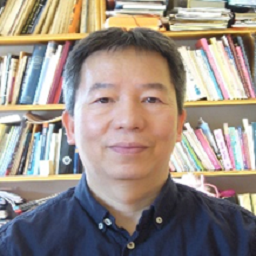
Nguyen Q. Chinh
Eötvös Loránd University
Hungary
Prof. Nguyen Quang Chinh, Doctor of Science (DSc) from the Hungarian Academy of Sciences (HAS), graduated in Physics from Eötvös Loránd University (ELTE) in 1985. Since then he has been working in various fields of materials science. His recent main research topics are: i) Plastic behavior and strengthening mechanisms of metals and alloys, ii) Microstructural and mechanical characteristics of ultrafine-grained and nanocrystalline materials, iii) Development of the depth sensing indentation method. He participated in many international collaborations. Currently he is the leader of the Hungarian group in a joint project with Russian researchers entitled “Study of the physical nature and development of ultra-low-temperature superplasticity in ultrafine-grained Al alloys for innovative applications”.